
Transrectal Ultrasound Guided Prostate Biopsy CPT Codes: A Comprehensive Overview (Updated 11/28/2025)
Today’s date is November 28, 2025. This overview details CPT codes for TRUS prostate biopsies, encompassing needle guidance, biopsy procedures, and associated services like sedation.
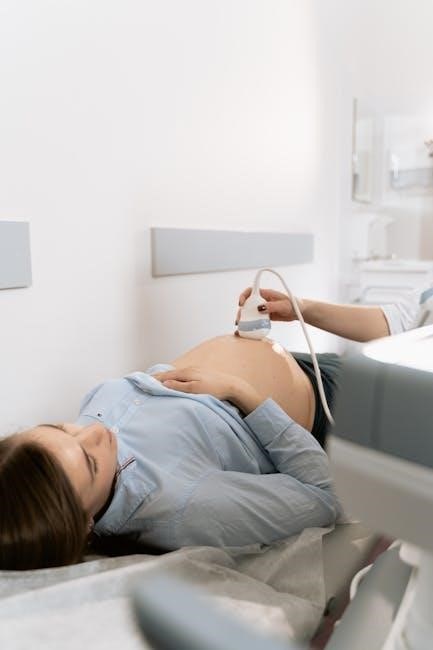
Transrectal Ultrasound (TRUS) guided prostate biopsy is a crucial diagnostic procedure for detecting prostate cancer. It involves using ultrasound imaging to visualize the prostate gland and guide a biopsy needle to obtain tissue samples. These samples are then examined under a microscope to identify cancerous cells. Accurate coding for this procedure is paramount for appropriate billing and reimbursement.
The procedure is commonly performed when a patient exhibits elevated Prostate-Specific Antigen (PSA) levels, abnormal Digital Rectal Exam (DRE) findings, or suspicious imaging results. Understanding the specific CPT (Current Procedural Terminology) codes associated with TRUS biopsies is essential for medical coders and billers. Proper code selection ensures compliance with coding guidelines and avoids claim denials. This overview will provide a detailed exploration of the relevant CPT codes, modifiers, and billing considerations related to TRUS prostate biopsies, updated as of November 28, 2025.
Understanding CPT Codes in Medical Billing
CPT codes are a standardized set of codes used to report medical, surgical, and diagnostic procedures and services to entities like insurance companies. They are maintained by the American Medical Association (AMA) and are crucial for accurate medical billing and claims processing. Selecting the correct CPT code is vital; inaccuracies can lead to claim denials, delayed payments, or even legal repercussions.
In the context of a Transrectal Ultrasound (TRUS) guided prostate biopsy, multiple codes may be applicable depending on the services rendered. These can include codes for the ultrasound guidance itself, the biopsy procedure, and any additional services performed, such as moderate sedation. Modifiers may also be necessary to provide further clarification regarding the services provided. Understanding the nuances of CPT coding, alongside relevant billing guidelines, is essential for maximizing reimbursement and ensuring compliance within the healthcare system.
Specific CPT Codes for TRUS Prostate Biopsy
Key codes include 55840 for ultrasound guidance and 55842 for the biopsy itself. Accurate code selection ensures proper billing and reimbursement.
CPT Code 55840: Transrectal Ultrasound Guidance for Needle Placement
CPT code 55840 specifically represents the transrectal ultrasound guidance utilized for accurate needle placement during a prostate biopsy. This code acknowledges the real-time imaging component crucial for targeting suspicious areas within the prostate gland. It doesn’t encompass the actual biopsy sample acquisition itself, but rather the navigational assistance provided by the ultrasound.
Billing for 55840 requires documentation demonstrating the use of ultrasound to visualize the prostate and guide the needle. This includes details about the ultrasound equipment used and the physician’s interpretation of the images. It’s often bundled with CPT code 55842 (the biopsy procedure) but may be reported separately under specific circumstances, such as when multiple biopsies are performed using different approaches or when guidance is provided for other procedures simultaneously. Proper documentation is vital to support medical necessity and avoid claim denials.
CPT Code 55842: Prostate Biopsy, Transrectal Ultrasound Guided
CPT code 55842 defines the actual transrectal ultrasound guided prostate biopsy procedure. This encompasses the collection of tissue samples from the prostate gland, facilitated by the real-time visualization provided by transrectal ultrasound. It represents the core work of obtaining the specimens needed for pathological examination to diagnose or stage prostate cancer.

Reporting 55842 necessitates detailed documentation of the number of cores taken, the locations targeted (based on ultrasound findings), and any complications encountered. This code is frequently billed in conjunction with 55840 (ultrasound guidance). However, depending on payer policies and the extent of the procedure, unbundling may be appropriate. Accurate coding and documentation are essential for appropriate reimbursement and to reflect the complexity of the procedure performed.

Additional Procedures & Associated CPT Codes
Beyond the core biopsy, codes exist for related services like fluid collection (76872) and moderate sedation (77002), often utilized during TRUS procedures.
CPT Code 76872: Ultrasound Guidance for Fluid Collection
CPT code 76872 specifically represents ultrasound guidance for the placement of a needle for fluid collection. In the context of a TRUS prostate biopsy, this code may be applicable if a hematoma or other fluid collection develops during or immediately following the procedure and requires ultrasound-guided drainage.

It’s crucial to understand that 76872 isn’t simply for any fluid aspiration; the ultrasound guidance is the key component. Documentation must clearly demonstrate the real-time ultrasound visualization used to direct the needle placement for accurate and safe fluid removal.
Appropriate use requires a distinct procedural service from the initial biopsy (potentially requiring modifier -59). Billing guidelines emphasize the necessity of detailed operative notes outlining the indication for fluid collection, the ultrasound findings, and the technique employed.
CPT Code 77002: Moderate Sedation
CPT code 77002 describes moderate sedation, often utilized during TRUS prostate biopsies to enhance patient comfort. This level of sedation involves pharmacologic management to induce a relaxed, but responsive state, allowing the patient to tolerate the procedure with minimal distress.
Proper documentation is paramount when billing 77002. Records must detail the medications administered, dosages, monitoring parameters (vital signs), and the duration of sedation. The physician providing the sedation must be qualified to administer and monitor this level of care.
It’s important to note that 77002 is reported in addition to the primary biopsy codes (55840 & 55842). Ensure appropriate coding guidelines are followed, and that the level of sedation provided aligns with the documentation to avoid claim denials or audits.

Coding Considerations & Modifiers
Modifiers like -59 and -26 are crucial for accurate billing of TRUS biopsies, clarifying distinct services and professional components respectively.
Modifier -59: Distinct Procedural Service
The -59 modifier is vitally important when reporting multiple procedures during a transrectal ultrasound (TRUS) guided prostate biopsy session. It indicates that a procedure was performed distinctly from another, preventing claim denials due to National Correct Coding Initiative (NCCI) edits. For example, if both 55840 (TRUS guidance) and 55842 (biopsy) are billed, -59 clarifies they aren’t bundled.
Proper documentation is key. Clearly articulate in the operative report why each service is separate. Was a biopsy taken from multiple locations requiring distinct needle passes? Was additional imaging performed beyond standard guidance? Simply appending -59 isn’t enough; justification must be present. Incorrect use leads to claim rejections, delaying reimbursement. Always verify NCCI edits before submitting claims.
Modifier -26: Professional Component
Modifier -26 signifies the professional component of a service, specifically the physician’s work in a TRUS guided prostate biopsy. This is crucial when facilities bill the technical component (e.g., ultrasound machine usage, supplies) separately. Applying -26 to codes like 55840 or 55842 ensures the physician’s interpretation, needle guidance, and clinical decision-making are appropriately reimbursed.
Accurate billing requires coordination between the physician and facility. The facility bills with modifier -25 (technical component), while the physician uses -26. Incorrect application, such as both parties using -26, will result in claim denials. Detailed documentation outlining the physician’s involvement – pre-procedure consultation, real-time guidance, post-procedure assessment – supports the -26 claim. Verify payer-specific guidelines regarding component billing.

Infection Prevention & Related Coding
Povidone-iodine cleansing and formalin disinfection are vital for reducing infectious complications post-TRUS biopsy, representing a low-cost, effective, non-antibiotic strategy.
Povidone-Iodine Preparation & Coding Implications
Thorough perineal preparation with povidone-iodine is a cornerstone of infection control protocols preceding transrectal ultrasound guided (TRUS) prostate biopsies. While not separately reportable with a specific CPT code, meticulous documentation of this preparation is crucial for demonstrating adherence to standard medical practice and mitigating risk.
Proper documentation supports medical necessity and can be vital during audits or claim reviews. The absence of documented preparation could raise concerns regarding appropriate care. Consider bundling this preparation into the overall TRUS biopsy procedure code (e.g., 55842) as it’s considered an inherent component of the service. However, detailed notes outlining the extent and method of preparation are strongly advised for comprehensive record-keeping and potential defense against scrutiny.
Formalin Disinfection Protocols & Documentation
Formalin disinfection of the transrectal ultrasound (TRUS) probe and biopsy needle is a critical step in reducing the risk of post-procedural infections following prostate biopsies. This practice, alongside povidone-iodine preparation, forms a robust infection prevention strategy. Like the preparation, formalin disinfection isn’t directly billable with a separate CPT code.
However, comprehensive documentation detailing the formalin disinfection process – including concentration used, immersion time, and personnel responsible – is paramount. This documentation demonstrates adherence to established guidelines and supports medical necessity. Accurate records are essential for defending against potential claim denials or audit findings related to infection control. Bundling this disinfection into the primary biopsy code (e.g., 55842) is standard, but detailed notes are vital for a complete patient record.

Billing & Reimbursement Aspects
Accurate ICD-10 coding is crucial for successful reimbursement of TRUS prostate biopsies, alongside correct CPT code selection, and diligent appeals processes when denials occur.

ICD-10 Codes Commonly Used with TRUS Biopsy
Selecting the appropriate ICD-10 code is paramount for accurate billing and claim adjudication when performing a transrectal ultrasound guided prostate biopsy. Commonly utilized codes reflect the reason for the biopsy, often stemming from elevated Prostate-Specific Antigen (PSA) levels. R79.89, other specified abnormal biochemical findings, is frequently used.
N60.3, benign prostatic hyperplasia with other urinary tract symptoms, may apply if the biopsy is performed due to obstructive symptoms. C61, malignant neoplasm of prostate, is used when suspicion of cancer is high, even before biopsy confirmation. R39.1, hematuria, can be relevant if blood in the urine prompted investigation.
Z12.4, encounter for screening for malignant neoplasm of prostate, is appropriate for screening biopsies. Z00.00, encounter for general adult medical examination without abnormal findings, might be used if the biopsy is part of a routine check-up. Specificity in code selection ensures accurate representation of the clinical picture and supports successful reimbursement.
Common Claim Denials & Appeals
Claim denials for TRUS prostate biopsies frequently arise from insufficient documentation, lacking medical necessity, or incorrect coding. A common denial involves unbundling – billing separately for components considered integral to the procedure (e.g., ultrasound guidance and biopsy itself). Modifier -59 use must be thoroughly justified.
Another frequent issue is mismatched ICD-10 codes; the diagnosis must clearly support the procedure performed. Denials also occur when the biopsy doesn’t align with established guidelines or lacks pre-authorization when required by the payer.
Successful appeals require detailed documentation demonstrating medical necessity, accurate CPT/ICD-10 coding, and adherence to payer policies. Include pathology reports, PSA levels, and physician notes. A clear, concise appeal letter addressing the denial reason is crucial. Tracking denial trends helps identify systemic coding errors and improve future claim submissions.

Future Trends in TRUS Biopsy Coding
Emerging technologies, like MRI-guided biopsies, may necessitate new CPT codes. Updated guidelines and evolving best practices will continually impact accurate coding.
Emerging Technologies & Potential New CPT Codes
The landscape of prostate biopsy is rapidly evolving, driven by advancements beyond traditional Transrectal Ultrasound (TRUS). MRI/Ultrasound fusion biopsies are gaining prominence, offering improved detection rates and targeted sampling. Currently, existing CPT codes are often utilized with modifiers to represent these combined approaches, but this isn’t ideal for long-term coding accuracy.
Potential new CPT codes could specifically address the complexity of fusion biopsies, differentiating them from standard TRUS procedures. Furthermore, the increasing use of saturation biopsies, where a larger number of cores are taken, may also warrant dedicated coding. Artificial intelligence (AI) assisted image analysis during the procedure could also lead to new codes reflecting the enhanced diagnostic capabilities.
Staying abreast of these technological shifts and advocating for appropriate CPT code development is crucial for accurate billing and reimbursement in the future.
Impact of Guidelines on Coding Practices
Clinical practice guidelines significantly influence TRUS prostate biopsy coding. Organizations like the American Urological Association (AUA) provide recommendations on biopsy indications, techniques, and post-procedure care. These guidelines directly impact code selection and documentation requirements.
For example, stricter adherence to risk stratification and shared decision-making may necessitate more detailed documentation supporting the medical necessity of the biopsy, impacting ICD-10 code choices. Infection prevention protocols, including povidone-iodine preparation and formalin disinfection, are now standard and must be meticulously documented to justify appropriate coding.
Changes in guidelines regarding antibiotic prophylaxis, or the use of alternative disinfection methods, will necessitate updates to coding practices and potentially influence reimbursement. Staying current with evolving guidelines is paramount for compliant and accurate billing.